
Relocating within India can be an exciting experience, not for you but for the pets. Whether you’re moving from Delhi to Bangalore, Hyderabad to Gujarat, or Rajasthan to Punjab, make sure the pets’ comfort and safety during the transit are your primary concern. One of the best ways to ensure this is through effective Pet crate training.
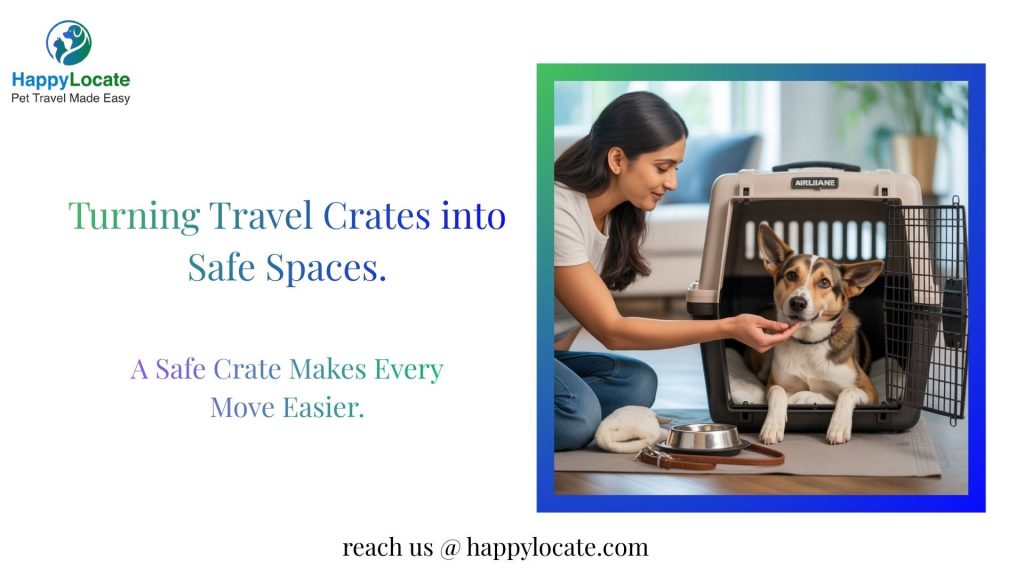
Crate training your pets before the move can help them feel more comfortable and reduce anxiety and make transit smoother for both you and your pets. Here are some practical tips for crate training for moving within India.
Choose the Right Pet Crate for Effective Pet Crate Training
Begin with bys. Selecting the appropriate crate based on the pet’s size, breed, and mode of travel. For flights and long-distance train moves, a hard IATA-approved crate with ideal ventilation is good for the transport. Your pets should get up, spin around, and lie down comfortably inside the crate.
For road travel, a metal or soft-sided crate may be suitable, depending on the duration and condition of the transit. Always ensure the crate is properly locked with a durable lock and well ventilated.
Introduce the pet crate slowly as part of effective pet crate training.
Begin crate training at least 3–4 weeks before your moving dates. Keep the crate in the area that your pet usually spends time. Leave the crate door open so that your pets explore its place gradually. Place their favorite treats, toys, and their familiar blanket inside the crate so that they create a positive environment.
Avoid forcing the pets inside the crate. Allow them to enter voluntarily and reward them with praise and treats inside the crate. This will build trust and avoid the fear of the crate.
Make the pet crate a comfortable, safe place during pet crate training.
The main goal of crate training is to make the crate feel like a safe place for your pets. Feed their meals inside the crate and let them nap inside. Add their favorite bedding and toy to make them more inviting. The more time they spend in the crate, the more comfortable they are during the actual move.
A short training session is good in the beginning. Then increase the duration of your pet’s stay in the crate.
Practice with short trips.
Once your pet is comfortable with staying inside the crate and playing inside the crate, begin taking them on short drives, like taking them to the vet or the park. Help them get used to the movements, noise, and other sensations associated with the traveling.
Start with 20-25 minutes of driving and gradually increase the duration of traveling. This point is important if you are moving long distance.
Keep them calm and consistent.
Pets are more sensitive to their owners’ emotions. Stay calm, composed, and positive throughout the training process. If you’re anxious, that will reflect on your pets, which may pick up your emotions. Crate training isn’t an overnight process; some pets may take days, and some pets may take weeks and months. Stick with the procedure. the procedure.
Prepare for departure day.
On the day of the move, keep the pets’ usual routine as normal as possible. Feed them a light meal a few hours before departure and allow time for the simple bathroom breaks. Keep familiar material. like a toy and blanket inside the crate to keep them comfortable.
Make sure that your pets are well identified with collar tags and microchips, if possible. Always carry the necessary documents, vaccination record, and prescribed medication.
Check out our latest blog:
Safe Pet Transport Across Indian Cities
Cabin vs. Cargo Hold for Pets? International Safety Guide
Pet Relocation from India to UAE, UK & USA: Rules, Requirements
A complete international pet relocation to-do list for pet parents
Check out our social media page of Pet Relocation