
Traveling with pets is like experiencing one of the joyful moments, but it also comes with a bunch of responsibilities, especially when the seasonal changes are involved. Whether you are heading to the beach in summer or the mountains in winter, each season will provide different risks for your furry friend. Preparing for these variations in weather and environment is crucial to ensure pets’ safety and the Pet Travel Guide.
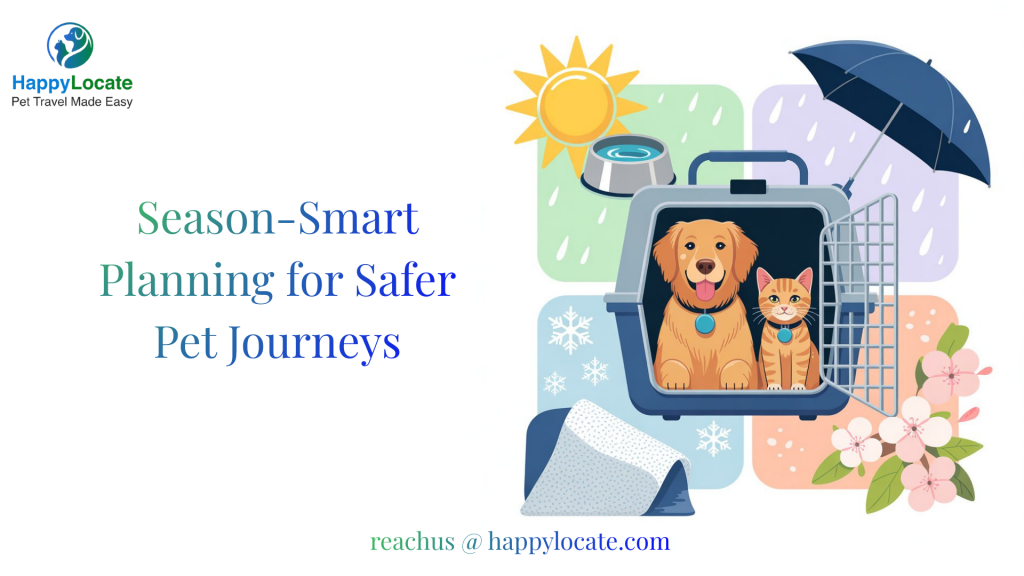
Understanding the seasonal obstacles.
Each change will bring its own set of objectives for travelling with your pets. In the time of spring, the pets will start experiencing the allergies and hanger-on. Overheating in summer may cause heatstroke and dehydration for your pets; the fall can bring climate fluctuation and toxic plants. While winter demands extra care against cold exposure. The travel will exaggerate this risk because pets are outside their usual environment. This will make your pets more susceptible.
Let’s look at how to navigate each season safely.
Spring: Your pets face allergy and parasite problems.
In spring, nature rises, and so do bugs. Like humans, your pets may suffer from seasonal allergies. Pollen and mold may cause sneezing, itchy skin, and watery eyes for your pets. Always keep in mind if you are traveling to high pollen areas.
Guide for Spring Pet Travel Guide
Before traveling, consult a vet, especially if your pets are prone to allergies.
Use flea and tick prevention cream for your pets; ticks are more active during travel.
Try not to send your pets to play in high grass and wooded areas unless they are fully protected.
Don’t send your pets to play with standing water.
Summer: Heat prevention and Pet Travel Guide
Summer is the most precious time to travel, but it is the most dangerous time to travel for your pets. High temperature, hot road surface, and excessive sun exposure lead to heatstroke; it’s life-threatening if not checked quickly.
Summer travel guide
The people will make the mistake of leaving the pets in the car, so never leave the pets inside the car, even with the window cracked.
Keep your pets hydrated by offering water frequently and bringing a portable water bowl or water bottle.
Try to go out with pets in the early morning or evening when the pathway is cooler.
Consider dog boots or paw wax when you are walking with your pet on a hot surface.
Use pet-safe sunscreen on exposed skin, especially on light-toned, medium-haired pets.
Signs of heatstroke include excessive gasping, salivating, vomiting, and collapse. Seek a vet as soon as possible.
Fall: Alteration safety
Foliage brings changes from the summer heat, but don’t let your guarding responsibilities down. Falling leaves may hide the hazards, and shorter daylight hours increase the risk of visibility-related accidents. Moreover, many poisonous plants are burgeoning.
Autumn Season Pet Travel Guide
Keep the pets on a leash during the road hikes or park visits to prevent mushroom absorption.
Use the reflective LED color for dark walks.
As the climate falls, make sure the pets have the appropriate shelter and warmth.
Temperature swings nowadays may confuse both you and your pets, so always pack for both warm days and chill nights.
Winter: Freezing travel concerns
Cold weather brings a bunch of risks, especially for the pets that are not comfortable with cold or freezing temperatures. Frostbite is a serious concern in elderly pets and short-haired pets.
Winter Pet Travel Guide
Try to use the insulated coat and waterproof boots, especially in snow or cold.
Wipe the paws of your pets after walking in snow or potholes.
Always keep pets warm in the car—bring a separate blanket for your pets to keep them warm, and do not leave them in the freezing vehicle.
If you are traveling to a high mountain or freezing destination, monitor your pet’s behavior for signs of discomfort or anxiety.
Please do not forget that, like extreme heat, extreme cold is also very dangerous if you are not prepared.
All-season general Pet Travel Guide
Regardless of season, there are global safety tips that can apply:
Identification: Please ensure that pets are microchipped before the travel.
Crate and Restraints: Use appropriate carriers to secure your pets while traveling.
Routine: The pets are the routine animals; they follow their daily routine that will make them comfortable.
Preplanning for Emergency: Always know the nearest vet from your chosen destination in case of emergency.
Check Out the Latest Blog:
Pet is Sick While Travelling (Pet Travel Guide)
Pet Leash Essentials for Travel: Smart Ways to Keep Pets Secured
Digestive Issues in Pets You Should Never Ignore
Personalized ID Tag: Why It’s Important for Pets
Check out our Social Media page of Pet Relocation